“What would I show my friend from Izvoarele?” – “Ce pot sa le arăt prietenilor mei din izvoarele?”
Everything! I would show my friend everything that Izvoarele and the beautiful people in it has to offer. When I first arrived in Schiulesti it was at night and the first thing that I did was had a look up at the stars, I was amazed by how many stars I could see. Till this day I still look up at the stars and just stare at them. On my second day when I woke up, I saw something a bit unexpected, I saw all of those mountains surrounding me, they are huge and colorful with the trees. It is a definite that my friend has to see this beautiful nature. All of my your five senses will trigger once you’re here, seeing the nature, smelling the fresh air and not pollution, hearing Romanian language and different animal sounds like roosters, tasting amazing food and petting cute dogs that are mostly homeless on the streets but although wild most of the are so friendly.
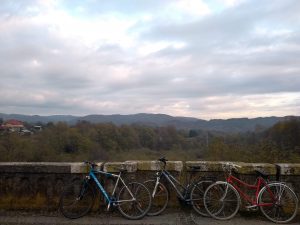
There are a lot of paths and bridges when walking between villages and some of the bridges look scary but you still find the courage to cross out of curiosity Best way to see around Izvoarele is either by walking or with a bike. With a car is nice as well but you won’t take in the views as much as walking or using a bike and in some paths you cannot go by car unless it flies. Some paths may lead you to this long river surrounded by mountains as well. Sometimes you might even see cows on the road just wondering or a flock of sheep chilling and eating grass.
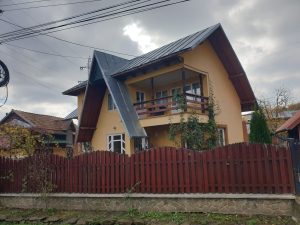
 Locals are so nice that in the morning they’ll tell you “Bună Dimineața” and give you a smile. There aren’t a lot of buses but that is not a problem because you can hitchhike with someone who’s going into the same direction as you. The houses are really beautiful here, some are really unique that you ask yourself “How did they built that?”. There is a lot to see and every time you go somewhere you discover something knew that you haven’t seen before or you learn something new.
—
Totul ! O sa le arat totul, ce izvoarele si săteni au de oferit . Cand am ajuns prima oară în Schiulesti era noapte si primul lucru pe care l-am facut a fost sa ma uit sus la stele , am fost uimită de cate am putut vedea . Pana si in ziua de azi imi place sa ma uit sus la stele si sa le privesc . A doua zi cand m-am trezit , am văzut ceva putin neașteptat am văzut toti acei munti care ma înconjurau, sunt asa de mari si plini de culoare si copaci . Neapărat prietenii mei trebuie sa vada natura asta frumoasa . Toate cele cinci simturi se vor aprinde atunci cand vei ajunge aici , văzând natura , simțind aerul curat si nepoluat , auzind limba Română și sunetele animalelor cum ar fi curcanii , gustând mâncare uimitoare si mângâind cățeii drăguți, care majoritatea sunt pe străzi chiar dacă cei mai mulți dintre ei sunt prietenoși.
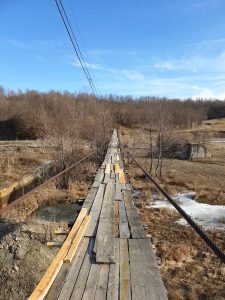
Aici sunt multe cărări si poduri care duc in alte sate, si chiar daca unele poduri arată înfricoșătoare tot le treci din curiozitate . Cea mai bună cale de a vizita izvoarele este pe jos sau cu bicicleta . Si cu mașina este bine dar nu vei putea vedea priveliștea minunata asa cum ai vedea-o mergând pe jos sau cu bicicleta , iar pe unele cărări nu poti merge cu masina doar daca zboară. Unele cărări te pot conduce la acest rau lung care asemene este înconjurat de munți . Cateodata poti vedea chiar vaci mergand pe drum sau o turma de oi mancand iarba linistite .
Săteni sunt asa de prietenoși dimineata iti vor spune “Buna dimineata ” si iti vor zâmbi. Aici nu sunt multe microbuze dar nu este nici o problema poti face autostopul cu cineva care se duce in aceași direcție ca tine . Aici casele sunt foarte frumoase , câteodată te întrebi “Cum au pututut-o construi ? ” . Sunt multe de descoperit si defiecaredata cand merci undeva descoperi ceva nou pe care nu ai mai vazut pana atunci sau înveți ceva nou.
Portret de voluntar – Justhine (Franța)
My name is Justhine, I am 18 years old and I am from Tourcoing, in France. I am sociable, listening to people, I love laughing and do funny work. In my free time, I like to knit and watch series or movies, I love and I need sports, I like playing rugby, basketball, dance…

I am a new volunteer in Curba de Cultura, I came to work with young people, to prepare and create activities, to learn languages, and more other things. I am in Romania for an EVS for 7 month.
I have always wanted to go in another country. This year, I didn’t really know what I wanted to do in school so I thought it was the good time to do my dream. When I was in school holidays, I worked in a social center with children. When Adice suggested me to work with Curba de Cultura, I said yes right away because it was my two favorites projects of my life together.
—
Numele meu este Justhine, am 18 ani și sunt din Tourcoing, Franța. Sunt sociabilă, ascult oamenii, îmi place să râd și să fac lucruri amuzante. În timpul liber îmi place să tricotez și să vizionez seriale sau filme, îmi place și am nevoie de sport, îmi place să joc rugby, baschet și să dansez…
Sunt voluntar nou în Curba de Cultură, am venit să lucrez cu tineri, să pregătesc și să creez activități, să învăț limbi străine și multe alte lucruri. Sunt în România pentru un EVS de 7 luni.
Întotdeauna mi-am dorit să merg în altă țară. Anul acesta nu prea știam ce vreau să fac la școală, așa că am crezut că este momentul potrivit pentru a-mi îndeplini visul. Când eram în vacanța școlară, lucram într-un centru social cu copiii. Când Adice mi-a sugerat să colaborez cu Curba de Cultură, am spus “da” imediat, pentru că erau împreună două proiecte preferate ale vieții mele.
Portret de voluntar – Jan (Norvegia)
[En]
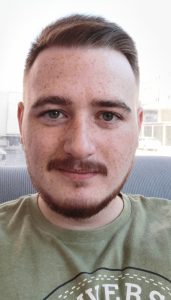
Hi my name is Jan Henri Christensen and this is my second EVS project within the European Solidarity Corps, I am 20 years old and love making a change no matter how small or big it is.
My origin is from Norway but my blood is 50% Turkish, I have a strong love for my family that has supported this decision in my life.
I am a person that loves people and strives in making others around me happy as I view their happiness as my own happiness.
I love making food, especially cakes (might need the recipe though) and I have a somewhat growing fascination for technological development too.
[Ro]
Bună, mă numesc Jan Henri Christensen și acesta este pentru mine al doilea proiect EVS din cadrul Corpului European de Solidaritate, am 20 de ani și îmi place să schimb lucrurile în jurul meu, indiferent cât de mici sunt acestea.
La origine sunt norvegian dar am 50% origini turcești, îmi iubesc foarte mult familia, care m-a susținut să iau această decizie.
Sunt o persoană care iubește oamenii și mă straduiesc mereu să-i fac pe cei din jurul meu fericiți, astfel devenind si eu fericit.
Îmi place să gătesc, mai ales prăjituri (deși am nevoie de rețetă) și deasemea mă fascinează progresul tehnologic.
Portret de voluntar – Danelle (Malta)
[En]
Hi, My name is Danelle Sciberras. I am 19 years old. I am from a small island in the Mediterranean sea called Malta. I am from a town called Kalkara but I live in Żabbar. I like to travel, exploring new cultures and languages and also their food. I love nature and all its beauty she has to offer. I like to watch movies and reading books as well. I love all kinds of animals especially cats and dogs. I grew up with old Maltese traditions which nowadays they are not so common anymore. I studied a course in college called Health and Social care for 2 years and I passed and I could’ve worked as a social support worker. I wanted to continue studying so I went on to a Bachelor degree course but I didn’t feel comfortable studying management. I am more of a hands on person and this course was mostly about writing and implementing policies. I was unhappy so I left and went to work. I volunteered a lot when I was younger and recently volunteered with amazing kids. For a couple of years I have been interested in doing an EVS and finally I found one that I like and interests me. I am looking forward to everything in these 10 months. 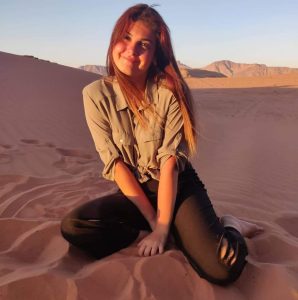
[Ro]
Bună, mă numesc Danelle Sciberras.
Eu am 19 ani. Sunt dintr-o insulă mică din Marea Mediterană numită Malta. Sunt dintr-un oraș numit Kalkara, dar locuiesc în Żabbar. Îmi place să călătoresc, să explorez culturi și limbi noi și, de asemenea, mâncarea lor. Îmi place natura și toată frumusețea pe care o are de oferit. Îmi place să vizionez filme și să citesc. Ador toate animalele, în special pisicile și câinii. Am crescut cu vechi tradiții malteze care în zilele noastre nu mai sunt atât de comune. Am studiat un curs în colegiu numit Sănătate și Îngrijire Socială timp de 2 ani putând să lucrez ca și asistent social.
Am vrut să continui studiile, așa că am continuat un curs de licență, dar nu m-am simțit confortabil studiind managementul. Sunt o persoană consecventă, iar acest curs a fost în mare parte despre scrierea și implementarea politicilor. Am fost nefericită așa că am plecat și am început să lucrez. Am făcut voluntariat foarte mult când eram mai tânără și recent am desfășurat activități de voluntariat cu o serie de copii uimitori. De câțiva ani mă interesează un proiect în cadrul EVS și în cele din urmă am găsit unul care îmi place și care mă interesează. Astept cu nerăbdare aceste 10 luni.
Portret de voluntar – Jānis (Latvia)
[En]
Hi everybody,
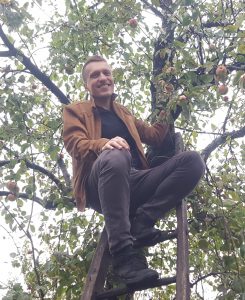
My name is Jānis Jēkabsons and I am 29 years old. I come from Rūjiena, a small rural town in the northern part of Latvia. I grew up in a farmhouse that brought me in close contact with nature and animals, something that will be a lifelong love for me. This is one of the reasons why I am delighted to stay in the lovely village of Schiulesti. Going abroad has always been one of my life goals. I can’t wait to learn the Romanian language.
Education to me is a never-ending process. My formal education includes history and diplomacy. Things that I am interested in are sports, outdoor activities, studying different topics of interest, spiritual practices, traveling, personal development and helping others. My dream is to become a life (transformational) coach and facilitate change.
I am here to provide as much value as I can to the local communities of Romania. I also expect to learn a lot from locals and other volunteers.
Life is like a ladder – never stop climbing to reach new heights, even if you keep falling again and again and again. Persistence and consistent action equal success. We are here to learn, grow, enjoy and support the lives of others!
Much love and see you all soon!
[Ro]
Bună tuturor,
Numele meu este Jānis Jēkabsons și am 29 de ani. Vin din Rūjiena, un orășel rural din partea de nord a Letoniei. Am crescut într-o fermă ce m-a adus aproape de natură și animale, care vor rămâne pentru mine o dragoste constantă pentru tot restul vieții. Acesta este unul dintre motivele pentru care sunt încântat să stau în minunatul sat Schiulești. Plecarea în străinătate a fost întotdeauna unul dintre obiectivele mele în viață. Abia aștept să învăț limba română.
Educația pentru mine este un proces care nu se încheie niciodată. Educația mea formală include istorie și diplomație. Lucrurile care mă interesează sunt sportul, activitățile în aer liber, studierea diferitelor subiecte de interes, practicile spirituale, călătoriile, dezvoltarea personală și ajutorarea celorlalți. Visul meu este de a deveni un life coach(transformațional) și de a facilita schimbarea.
Sunt aici pentru a valorifica pe cât mai mult posibil comunitățile locale din România. De asemenea, mă aștept să învăț multe de la localnici și alți voluntari.
Viața este ca o scară – nu înceta niciodată să urci pentru a atinge înălțimi noi, chiar dacă vei continua să cazi din nou și din nou și din nou. Perseverența și acțiunea consecventă sunt egale cu succesul. Suntem aici pentru a învăța, crește, bucura și susține viața altora!
Multă dragoste și ne vedem în curând!
Portret de voluntar – Ana (Andalucia)
[En]
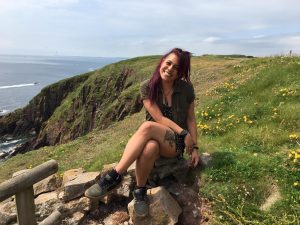
HOLA! My name is Ana and I come from Andalucia, a beautiful land in España. I like to say the name of my region because for me it is one of the better places in the world to enjoy the life (even knowing how big is the world haha).
I came to the Izvoarele Commune to enjoy the experience with Curba de Cultura during 10 months and to know better how is the charming life in the Carpathian Montains.
I studied Social Work and Social Education, and also a Master Degree in Psychology for Communitarian Intervention. It’s a field to work which I really enjoy and I really think I have skill to develop it. However, I’ve been a bit disconnected of this job during a while because I was discovering the wonderful Wales, in the UK, where I also improved the English language. So now, it’s a really good opportunity for me to reconnect not only with my professional side but also with the non formal education.
I like writing, handcrafts and sewing. And I also love history and politics and being deep on the wise of the local culture wherever I place myself. One of my favorite things is to enjoy the little things of the life in all the senses.
If you have something that I can learn from you and I have something that I can teach you, let’s exchange our time!!
NOS VEMOS PRONTO! 😀
[Ro]
Salut! Sunt Ana și provin din Andalucia, o regiune minunată din Spania. Îmi place să spun de unde vin, deoarece pentru mine este unul dintre cele mai bune locuri din lume în care să mă bucur de viață (și chiar știu cât e de mare lumea).
Am venit în Izvoarele pentru a mă bucura de experiență alături de Curba de Cultură în următoarele 10 luni și de asemena pentru a vedea mai bine cum decurge viața in Munții Carpați.
Am studiat Asistență Socială și Sociologie si am un grad de master în Psihologie pentru Intervenție Comunitară. Este un domeniu de lucru care îmi place foarte mult și cred ca am abilitățile necesare pentru a progresa. Cu toate acestea, am luat o pauză de la acest job și am vizitat și descoperit Wales, din Marea Britanie, unde mi-am și perfecționat limba engleză. Acum am oportunitatea perfectă pentru a reveni la munca pentru care sunt calificată dar și la educația nonformală.
Îmi place să scriu, meșteșugurile, să cos. De asemenea îmi plac istoria și politica precum și să descopăr profunzimea și înțelepciunea în culturile locale, oriunde m-aș afla. Unul din lucrurile mele preferate este să mă bucur de lucrurile mici în viață, în toate sensurile.
Dacă vrei să mă înveți ceva și crezi că și eu te pot învața ceva pe tine, hai sa ne petrecem ceva timp împreună.
NE VEDEM CURĂND! 😀
My reflection about the competition of essays
Since the end of January I have been in Romania within the framework of an EVS in the organisation Curba de Cultura. And thus also in a project called BYSC-E, in which there are two more volunteers, with whom I also share a house.
Now about 8 months have passed and we have organized many different projects and events.
The basic idea of the project is to teach children and young people about environmental issues. But apart from imparting knowledge, it is also (and above all) about rising awareness towards topics such as recycling, environmental pollution and one’s own ecological behaviour. The mediation takes place in schools and outside the schools.
In the course of time we have planned and carried out many “school lessons”. But our didactic plan differs from that of the school. We focus on non-formal education and structure our lessons accordingly.
We go to schools and build bins with the young people in which they can separate the trash and we talk to the pupils about recycling and the responsibility of each individual. This usually takes place in the lower grades.
We try to convey knowledge in an interesting and appropriate way for the target group, through games or interactive design.
We also offer many activities outside the school. On World Environment Day, for example, we have organized an exhibition and a debate in our youth centre. We have invited young people to talk to them about their future in an increasingly globalised world and what opportunities each individual has to contribute to a more ecological world.
During the school holidays we organized a camp in which we dealt with four days of environmental topics. We did workshops with the children where they could try out how to make useful things out of trash. We also organized a hike with the children to pick up the trash in the forest.
Besides these activities, there were also activities for which each of us was individually responsible.
As described above, we go to schools to discuss environmental issues with the students. Besides lower grades we also went to high schools.
In this context I was responsible for a certain activity.
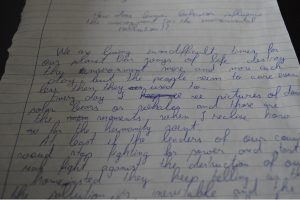
The idea was to organize a competition based on creative writing in the 12th grade. Of course thematically appropriate. So I thought about which topic could be interesting for the target group and how I could implement it. The topic was “How does human behavior influences the environment ( or the environmental pollution) ?”
I decided to leave it up to the students to choose which text form to use, so it could be an essay, a poem, a song or something like that. The idea was to give the students the plan so that each student could write something. One week after the writing I should go back to the same class to “award” the best text and go deeper in the topic.
So I went to school with this plan. I presented my idea to the students in the presence of the teacher and focused on the free choice of text. I think this was something new for the students. The focus, as mentioned above, is on non-formal education. I wanted the students to know that they could express themselves the way they wanted.
But (unfortunately) it went a bit different. While I was still explaining my plan, I was interrupted by the teacher who reminded the students how to structure an essay and remind them of the corresponding school lessons. She also told the students that they should substantiate their texts with many facts. I explained again that each student can express him- or herself as (s)he wishes. And that it will not evaluate with marks. So the students started writing and every student wrote something on his or her paper. I took the texts with me to read them. Contrary to my expectations, many students disregarded the teacher’s instructions and wrote very personal and poetic (regardless of a perfect structure) texts. Much to my delight.
The next week I went back to class to talk to the students about their texts. Unfortunately there was no real discussion and I decided to change the content of the lesson. I also decided not to award the best text.
Two things I learned during this activity or were a gain in knowledge for me:
1. I was very surprised by the content of the students’ texts. Most of the students drew a gloomy picture of the future in relation to the environment and seemed more or less helpless and powerless in their responsibility.
2. I and we propagate again and again a knowledge transfer based on non-formal education. Not only since our project, but for many years. I have found (and not only in this activity) that it is still new territory for teachers and that they find it difficult to implement or accept this form of education.
It’s no big surprise that some teachers have a hard time with these aspects. I think that the school system (not only in Romania!) is largely based on a clearly formal curriculum and this determines the everyday life and thinking of the teachers. So they are certainly very well educated in their field and know how to transport this knowledge in the way mentioned above.
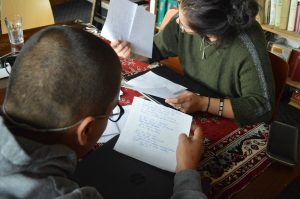
Nevertheless, I and we try to implement other aspects of education, not only the mediation, but also the contents into the everyday school life.
Fortunately, we have cooperations with the schools in the area and can slowly but surely introduce a different kind of mediation. Not to replace the teachers, but to supplement them!
Discovering Romanian culture –
The topic of the following article is « Discovering the romanian culture ». In here, I would like to talk about what I felt as differences from France in Romania, considering the culture as a set of patterns gathering specific beliefs, behaviours, language, method of production … shared by people constituting a specific society this way. Living in Schiulesti, in Izvoarele commune, I experiment far more the rural Romania than the urban one. And talking about way of living, it seems to make a big difference. However, I’d like to specify the fact that I don’t speak romanian, what does not help to create a contact with the neighbourhood. In Schiulesti for example it is rare to find someone who speaks English. It is a rural area specificity I guess, in Bucharest almost everybody speaks English. What I mean is that my first personal observations are maybe not this significant because of not enough dialogues with natives.
First I’d like to talk about something which surprised me: paradoxical feelings some Romanian have toward their country being both proud and ashamed. In the streets, both in where we live and in Bucharest we can see Romanian flags hung on a balcon or in the garden what only happens during the football world cup in France, especially when the french team win! In Schiulesti, many people talk about the beauty of the landscapes surrounding the village, and more generally the inhabitants seem interested in sharing traditions such as preparing sarmale for Christmas. Sometimes this pride seems to be extreme, expressed by a strong feeling of patriotism and especially with a bipolar vision dividing still the world between west and east as if the cold war never finished. Indeed, we’ve already had dialogues turning into conflict just talking about our studies in France, we felt then this resentful we can find in here toward the west. Also, this strong expression of patriotism is often shared with a discriminatory vision of the society rejecting both gypsies, homosexuals, more generally the minorities. If those people want to remain in Romania forever and ever, there are others who express easily shame toward Romania. For example, when we said to a cashier we enjoyed our life in here she laughed at us saying « Are you kidding ? » Many young people sound to want to go abroad, and do not see their future in the country according to little interviews we did on our On Arrival Training (OAT) in Bucharest. For many, that decision to go abroad seems obvious. As if the future was abroad. But when in many rich countries such as France, more and more thinkers talk about the necessity to consume less, the necessity of economic decrease not only for the planet but for the entire society, maybe Romania is in some ways ahead of his time, especially in the rural areas.
In here, the rythm is totally different from the one in the cities. In Schiulesti there are around four bus per days during the week. No bus the week end. There are little shops in which you can only pay by cash. In most of the houses, there are no central heating system, it’s doing fire you warm the rooms. You don’t have fancy devices to cook or to cut the grass. But even if there is no bus, no car, no Nespresso machine to prepare the coffee, no George Clooney neither, you find ways to do what you have to do and that with the help of people. You need to go to the city ? You can easily find a car which is also going to Valenii de Munte, people very often stop for hitchhikers, it’s usual. It maybe sounds nothing but I think it’s far different from a usual mind of consumer : it is a smart, solidar and simple way of thinking : how can we cultivate the garden with the tools we have ? How can we cook with the ingredients left ? How can we make the house more attractive with what there is in the attic ? And adopting this point of view, you realise the wealth you have around you because of the garden, because of the well, because of people with big knowledge about nature… The relationship with the nature seems to me also different from the one I knew. For example, in the village we see many cows/ chicken/ horses walking freely. In the same time animals seems to be considered in a functionnal way, as tools with the horses carrying wood from village to others or dogs chained to protect the house but people often let them walking on the streets especially the week-end. As if their owners trust their animals enough to let them go freely. They look confident about that when in France animals are always locked up. I’d like to be able to have a dialogue in romanian to speak with the neighbourhood in here. There is a community spirit, everybody greets you and many want to talk with you even if you tell them that you can not speak romanian. What is frustrating ! The community is also cohesive because of the religion. Almost everybody makes the sign of the cross in the bus when we meet a church and there are many orthodox churches around !
The community I was talking about seems to me particularly conservative because of different observations we can do. As I said, the religion seems still very important because of the cross signs, religious celebrations such as Eastern, prepared way ahead and even in the schools, the marriage remaining something very important in here… What’s more there is apparently a big gap between female and male roles with places with men only such as the bar we have in Schiulesti, main place of socialization, the same with the places to drink in Izvoarele village. During the weekend we can see women gathered in front of their houses, talking together on benches when men are in the bar. This conservative seems also present in school with quite strict teachers, with strong vertical relationship and education by exclusion of children who are not in the norm : with disabilities, with family issues…
To conclude, I’d like to share my personal feelings about these first months I spent in here, living in Izvoarele commune. There are for sure bias in my perception because I am in here as a volunteer for Curba de Cultura and living with other international volunteers I don’t really share life conditions/habits/rythm natives have but the environment in here is very quiet I guess because of the wonderful landscapes we have around but also because of a slower countryside rythm which makes you slowing down in your own mind also. What’s more, people in here welcome us even if we have obvious different way of thinking/ way of life and even with the language gap, they want to meet us, to greet us. What makes our time in here very pleasant.
/RO/
Subiectul următorului articol este Descoperirea culturii române. Aici, aș vrea să vorbesc despre ce am simțit ca diferențe din Franța, în România, considerând această cultură ca un set de modele care adună convingeri specifice, comportamente, limbă, metode de producere… transmise de oameni, constituind astfel o societate specifică. Locuind în Schiulești, în comuna Izvoarele, am experimentat mult mai mult partea rurală a României, decât cea urbană. Și vorbind despre felul de a trăi, întâlnim o mare diferență. Oricum, trebuie să specific că eu nu vorbesc limba română, iar acest lucru nu ajută la crearea unui contact cu vecinii. În Schiulești, de exemplu, este rar să găsești o persoană care vorbește limba engleză. Cred că este o zonă rurală specifică, în București aproape toată lumea vorbește engleză. La ce mă refer este faptul că primele mele observații nu sunt atât de semnificative, deoarece nu am purtat dialoguri îndeajuns cu nativii.
Pentru început, aș vrea să vorbesc despre ceva ce m-a surprins: paradoxalul sentiment al românilor față de țara lor, fiind atât de mandri și rușinoși în același timp. Pe străzi, în ambele locuri unde locuim, în București, putem vedea steagul României fluturând pe balcon, în grădină, iar acest lucru îl întâlnim în Franța doar în timpul meciului de fotbal pentru cupa mondială, în special când echipa franceză câștigă! În Schiulești mulți oameni vorbesc despre frumusețea peisajelor înconjurătoare, iar în general locuitorii sunt interesați să transmită tradițiile, cum ar fi prepararea sarmalelor pentru Crăciun. Uneori, această sarbătoare pare a fi extremă, exprimată printr-un sentiment puternic de patriotism și în special cu o viziune bipolară, împărțind lumea în vest și est, ca și cum Războiul Rece nu s-ar fi terminat încă. La fel, deja am purtat discuții contradictorii despre studiile noastre din Franța, apoi ne-am simțit ofensați de ce am găsit aici, în zona vestică. Totodată, acest puternic sentiment de patriotism este transmis des din prisma viziunii discriminatorii despre societate excluzând țiganii și homosexualii, în general minoritățile. Dacă acești oameni ar vrea să rămână în România pentru totdeauna, sunt alții care își exprimă ușor rușinea față de țară. De exemplu, când noi îi spunem unei vânzătoare că ne bucurăm de viața de aici, ea râde și spune „ – Voi glumiți?” Mulți tineri sunt tentați să meargă în străinătate, deoarece nu reușesc să-și vadă propriul viitor în țară, în conformitate cu scurtele interviuri pe care le-am realizat în cadrul OAT (Curs de formare la sosire), București. Pentru mulți, aceea decizie de a pleaca în străinătate pare singura opțiune. De parcă viitorul ar fi fost deja în străinătate. Atunci când în majoritatea țărilor dezvoltate, asemenea Franței, din ce în ce mai mulți intelectuali vorbesc despre necesitatea consumului redus, necesitatea descreșterii economice este importantă nu doar pentru planetă, dar și pentru întreaga societate, poate România este în frunte în unele părți de această dată, în special în zonele rurale.
Aici, ritmul este total diferit de cel din oraș. În Schiulești există în jur de patru autobuze pe zi în timpul săptămânii. Nici un autobuz în weekend. Sunt magazine micuțe în care poți plăti doar cash. În majoritatea caselor nu există încălzire centrală, se face focul pentru a încălzi camerele. Nu ai dispozitive fantastice pentru a găti sau pentru a tăia iarba. Dar chiar dacă nu există nici un autobuz, nici o mașinărie Nespresso care să pregătească cafeaua, nici George Clooney, găsești modalități de a face ceea ce trebuie să faci și asta cu ajutorul oamenilor. Ai nevoie să te duci în oraș? Poți să găsești ușor o mașină care merge de asemenea spre Vălenii de Munte, oamenii opresc des pentru autostopiști, este ceva obișnuit.
Poate nu vă sună nimic, dar eu cred că gândirea este cu mult diferită de cea obișnuită a consumatorului: este un mod de gândire inteligent, solidar și simplu: cum putem cultiva grădina cu uneltele pe care le avem? Cum putem găti cu ingredientele rămase? Cum putem face casa mai atractivă cu ceea ce există în pod? Și prin adoptarea acestui punct de vedere, îți dai seama de bogăția pe care o ai în jurul tău datorită grădinii, datorită fântânii, datorită oamenilor cu mari cunoștințe despre natură… Relația cu natura mi se pare, de asemenea, diferită de cea pe care am știut-o. De exemplu, în sat vedem multe vaci/ pui/ cai care merg liber. În același timp, animalele par a fi considerate într-o manieră funcțională, cum ar fi uneltele, caii care transportă lemn din sat în altele sau câinii legați pentru a proteja casa, dar oamenii le lasă de multe ori să meargă pe stradă, în special la sfârșitul săptămânii. Ca și cum proprietarii lor ar avea încredere în animalele lor suficient pentru a le permite să meargă libere. Ei par a fi încrezători, pe când în Franța animalele sunt întotdeauna închise. Aș vrea să pot avea un dialog în limba română pentru a vorbi cu vecinii de aici. Există un spirit comunitar, toată lumea te salută și mulți vor să vorbească cu tine, chiar dacă le spui că nu poți vorbi în limba română. Ceea ce este frustrant! Comunitatea este, de asemenea, coezivă datorită religiei. Aproape toată lumea face semnul crucii în autobuz, când întâlnim o biserică… și există multe biserici ortodoxe în jurul nostru! Comunitatea despre care vorbeam pare a fi extrem de conservatoare din cauza unor observații diferite pe care le putem face. Așa cum am spus, religia pare a fi încă foarte importantă din cauza semnelor, a sărbătorilor religioase, cum ar fi cea de Paște, pregătită înainte și chiar în școli, căsătoria rămâne ceva foarte important aici… În plus, există un mare decalaj între rolul femeilor si al bărbaților, cu locuri numai pentru bărbați, cum ar fi cârciuma pe care o avem în Schiulesti, locul principal al socializării, la fel ca și locurile de băut din satul Izvoarele. În timpul săptămânii observăm că femeile s-au adunat în fața casei lor, vorbind împreună și stând pe bănci, atunci când bărbații se află la bar. Acest lucru conservator pare, de asemenea, prezent în școală, cu profesorii destul de stricți, cu o puternică relație de verticalitate și educație, prin excluderea copiilor care nu se află în normă: cu dizabilități, cu probleme de familie…
În concluzie, aș dori să împărtășesc sentimentele mele personale despre aceste prime luni petrecute aici, pe care le trăiesc în comuna Izvoarele. Există o anumită părtinire în percepția mea, deoarece sunt aici ca voluntar pentru Curba de Cultură și trăiesc împreună cu alți voluntari internaționali. Nu prea îmi împărtășesc condițiile de viață/ obiceiurile/ ritmurile native pe care le am, dar mediul înconjurător aici este foarte liniștit. Cred că datorită peisajelor minunate pe care le avem în jur, dar și datorită ritmului mai redus al vieții de la țară, te fac să-ți liniștești mintea. În plus, oamenii de aici ne întâmpină bine, chiar dacă avem un mod diferit de gândire/ mod de viață diferit și chiar și cu decalajele de limbă, vor să ne întâlnească, să ne salute. Ceea ce face sejurul nostru de aici foarte plăcut.
Caroline este în România pentru o perioadă de șase luni, din martie 2019 până în august 2019, în cadrul proiectului Voluntary Generation [2017-2-FR01-KA105-013326] proiect co-finanțat de Uniunea Europeană prin Programul Erasmus+ și implementat în România de către Curba de Cultură.
Interactive lessons on animal protection / Lecții interactive privind protecția animalelor
Although situation concerning animal rights in my homeland, (Croatia), is far from an exemplary one, the number of street dogs and cats in Romania as well as the number of dogs that could be seen kept on very short chains in backyards left me in an unpleasant surprise. After an initial shock the easiest thing would be to let anger and prejudice shape one’s attitude towards the situations. It is also very easy to forget that people’s behaviors are influenced by their environments and that most of the time they do bad things not out of cruelty but because the lack of knowledge. Hence, in situations like this one it is much more useful to approach the problem with patience and openness to a dialogue.
Having been given the privilege and the responsibility to participate in shaping some young minds in Romania, I decided to spend a couple of school hours dedicated to the topic of animal protection. I also decided to broaden the topic on animals in different industries. My first lesson on the topic was with the ninth grade in Maneciu and, honestly, before the class even started I was worried it would turn out to a disaster. How do I get an average teenager think about cruelty of meet farms and animal testing in cosmetics industry? In the worst case scenario the students would see me as a militant vegetarian enforcing her propaganda.
When the class started, my fears faded away. The students approached the topic with curiosity. Their ideas and opinions showed empathy, humor and honesty. “I feel very sad for the chicken but I also love to eat them.”, a sentence that actually in a very simple and unpretentious way sums up all the problematic. At the end of the lesson I didn’t leave the classroom full of new animal rights activist, of course, but I did leave this young people with many new questions and information that by their own words were completely unfamiliar to them before the class. I am not so naïve to think that talking 50 minutes about animal rights will fully change their attitudes but I am very happy to at least scratch the surface.
With six graders I concentrated mostly on talking about stray animals and pets. During the debate they were supposed to move over the line placed in the middle of the classroom floor according to their level of agreeing with a certain statement and then elaborate why and how they chose their position. I have to say that I was very surprised how they listened to each other and treated each other’s opinions with respect. Most of them agreed that animals deserve shelter, that it is not right to physically harm animals and that it is necessary to take sick animal to a vet. However, when the topic of neutering came up, children were very indecisive. Some of them have witnessed horrible scenes like people burning alive newborn kittens and yet they believed that it is really important for an animal to have offspring even if that includes such tragic outcomes. Their view on that matter couldn’t be more different than mine but in the world where many adults remain indifferent to the environment surrounding them, taking sort of “whatever” attitude towards everything, it’s refreshing to see children who think and readily voice their opinions.
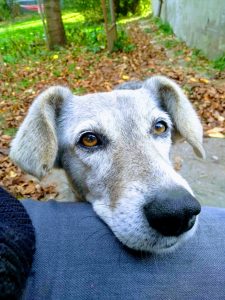
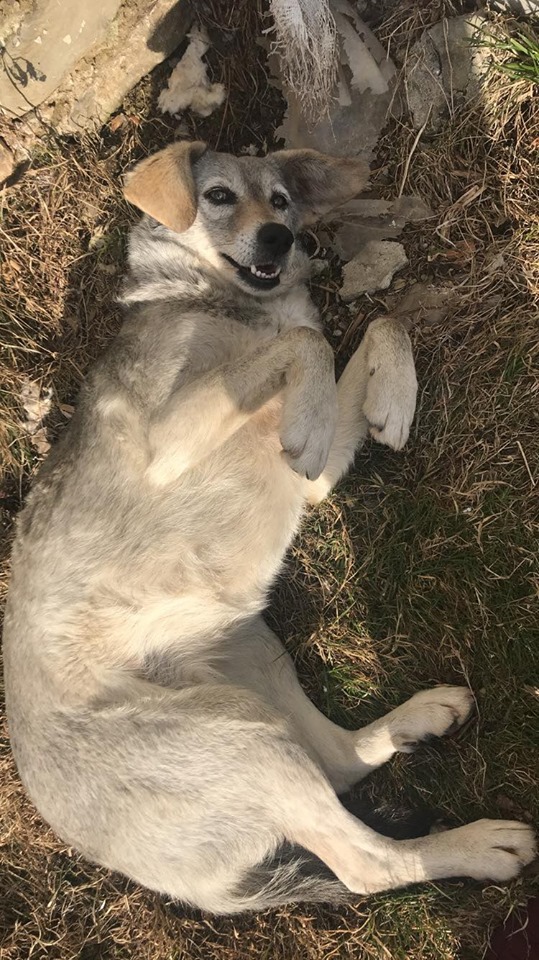
Before finishing my story, there’s just one little thing I’d like to mention. Sometime just one specific act of kindness can serve as more positive examples than all the theoretical discussion. That is the reason I would like to thank the former volunteers of Curba de Cultura who have adopted Fifty. Fifty is a former street dog who has been happily sharing home with the volunteers of Schiulesti for more than three years now. To avoid ending the article with some corny phrase, (and when speaking about a dogs it’s difficult for me not to), I’m offering you a photo of Fifty:
Deși situația privind drepturile animalelor din țara mea (Croația) este departe de a fi una exemplară, numărul câinilor și pisicilor străzii din România, precum și numărul de câini care pe care îi putem vedea ținuți legați cu lanțuri foarte scurte în curțile din spate, mi-au adus o surpriză neplăcută. După un șoc inițial, cel mai ușor lucru ar fi să lași furia și prejudecata să-ți modeleze atitudinea față de situații. Este, de asemenea, foarte ușor să uităm că și comportamentele oamenilor sunt influențate de mediile lor și că, de cele mai multe ori, fac lucruri rele, nu din cruzime ci din cauza lipsei de cunoștințe. Prin urmare, în situații ca aceasta este mult mai util să abordăm problema cu răbdare și deschidere către un dialog.
Având privilegiul și responsabilitatea de a participa la modelarea unor minți tinere în România, am decis să petrec câteva ore de școală dedicate temei protecției animalelor. De asemenea, am decis să extind subiectul asupra animalelor în diferite industrii. Prima mea lecție despre acest subiect a fost cu clasa a IX-a la Maneciu și, sincer, înainte ca lecția să înceapă, am fost îngrijorată că se va ajunge la un dezastru. Cum fac ca un adolescent obișnuit să se gândească la cruzimea fermelor de carne și la testarea pe animale în industria cosmetică? În cel mai rău scenariu, studenții mă vor vedea ca un vegetarian militant care își impune propaganda.
Când a început ora, temerile mele au dispărut. Studenții au abordat cu curiozitate subiectul. Ideile și opiniile lor au arătat empatie, umor și onestitate. “Mă simt foarte trist pentru pui, dar îmi place și să îi mănânc”, o propoziție care, într-adevăr, într-un mod foarte simplu și nepretențios, rezumă toate problemele. La sfârșitul lecției, nu am părăsit sala de clasă plină de activiști noi pentru drepturile animalelor, desigur, dar am lăsat acești tineri cu multe întrebări și informații noi care, prin propriile lor cuvinte, erau complet necunoscute înaintea orei. Nu sunt atât de naivă să cred că vorbind 50 de minute despre drepturile animalelor ei își vor schimba pe deplin atitudinea, dar sunt foarte fericită că cel puțin am atins subiectul.
M-am concentrat alături de 6 elevi vorbind despre animalele fără stăpân și animalele de companie. În timpul dezbaterii, ei trebuiau să se deplaseze peste linia aflată în mijlocul sălii de clasă, în funcție de nivelul lor de acord cu o anumită declarație și apoi să explice de ce și cum și-au ales poziția. Trebuie să spun că am fost foarte surprinsă de cum s-au ascultat unul pe celălalt și s-au tratat reciproc cu puncte de vedere. Mulți dintre ei au fost de acord că animalele merită adăpost, că nu este corect să se facă rău fizic animalelor și că este necesar să se ia animalul bolnav la un veterinar. Cu toate acestea, când a apărut tema castrării, copiii au fost foarte indeciși. Unii dintre ei au fost martorii unor scene oribile cum ar fi oameni care ard puii nou-născuți vii și totuși ei au crezut că este cu adevărat important ca un animal să aibă descendenți, chiar dacă acesta include asemenea rezultate tragice. Opinia lor în această chestiune nu ar putea fi mai diferită decât a mea, dar în lumea în care mulți adulți rămân indiferenți față de mediul înconjurător, luând o atitudine “indiferentă” față de tot, este răcoritor să vezi copiii care gândesc și își exprimă ușor opiniile .
Înainte de a încheia povestea mea, este doar un mic lucru pe care aș vrea să-l menționez. Uneori, doar un singur act de bunătate poate servi drept exemple mai pozitive decât toată discuția teoretică. Acesta este motivul pentru care aș dori să mulțumesc foștilor voluntari ai Curba de Cultura care au adopta-o pe Fifty. Fifty este un fost câine de stradă care a împărțit fericit această casă cu voluntarii lui Schiulești de mai bine de trei ani. Pentru a evita sfârșitul articolului cu o anumită frază (și când vorbim despre un câine este dificil pentru mine să nu), vă ofer o fotografie cu Fifty.
Tea este în România pentru o perioadă de șase luni, din decembrie 2018 până în mai 2019, în cadrul proiectului Volunteer to Grow [2017-1-HR01-KA105-035177] proiect co-finanțat de Uniunea Europeană prin Programul Erasmus+ și implementat în România de către Curba de Cultură.
How will EVS in Romania improve my CV ?

Hello everybody, today I want to write a special article. As written in the title it’s about the relation between EVS and CV. I know that sometime is very complicated to find quickly a job without this paper that traces your professional life. In my case, I wanted to continue my studies in a Master programme but when I finished my bachelor degree I had just a little professional experience. I studied Sociology and History and I wanted to pursue a Communication/Event Management Master. Every answer was negative because of lack of experience or simply because I had not done “the right studies”. But now I know how to improve my CV thanks to my EVS.
Making an EVS was the best idea I had. It’s an experience which can give you the keys to succeed. Thanks to EVS you can be more visible for the recruiters. Effectively, with EVS I improve myself for instance my competences for event organizing, work in an international teamwork, autonomy, communication in English… I succeed to find my professional way and what I want in my life. An EVS is a springboard for your CV, why? First you left your comfort zone, it means that nothing can disturb you. Secondly you went to meet different people and discover their daily life, in this way you are seen as an actor in society with an open mind. In addition during your EVS you must have had to accomplish some tasks, this gives you an experience that some people don’t have when they leave universities or schools.
And to finish the most important is the Youthpass. Is true that the Youthpass is a rather long file to do but it enhances EVERY competence, the things you’ve done and everything you’ve improved. It gives a general idea of your journey, what you have accomplished and what you know how to do. If you have doubts in your life, needs to refocus or make contacts so don’t hesitate to embark on an adventure with the EVS. This isn’t only an adventure for a few months, it can be helpful for the adventure of your life.
Julie este în România pentru o perioadă de opt luni, din noiembrie 2018 până în iunie 2019, în cadrul proiectului Voluntary Generation [2017-2-FR02-KA105-013326] proiect co-finanțat de Uniunea Europeană prin Programul Erasmus+ și implementat în România de către Curba de Cultură.